The Seven Pillars of Intentional Living
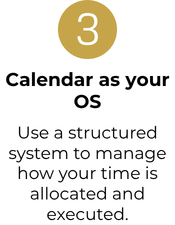
Pillar 3: Calendar as Your OS

Your calendar shouldn’t tell you how to live your life. You tell your calendar how you want to live it.
A lot of people have a terrible relationship with their calendar. It feels restrictive. Demanding. Judgmental. It’s the place where meetings, appointments, deadlines, work, and all the other things you have to do live.
No wonder you don’t want to look at it.
But your calendar isn’t supposed to be your boss. It’s a tool you create to help you live the life you’ve planned.
Calendar as Your Operating System means using your calendar as a visual plan for how you intend to use your time. You program it with your plans, priorities, and decisions, then use it as the operating system that helps you live them out.
You can create a calendar you actually like.
Imagine opening your calendar and not seeing a week full of things being demanded from you, but a week you’ve deliberately designed.
Yes, it contains work. Meetings. Appointments. Deadlines. Chores and errands and all the other things that make life happen.
But it also contains lunch. Time to read. The class you’re excited about. An afternoon working on something you care about. Dinner with a friend. Your workout. Time to play a video game, work in the garden, take the dog somewhere fun, or sit on the couch and watch terrible television.
And importantly, it contains enough information about your real life that you can actually trust the plan you’re looking at.
The goal isn’t to make every minute productive. It’s to create a calendar that helps you make room for the life you’re trying to live.
When your calendar feels more like an enemy
Your relationship with your calendar may need some attention if:
- You avoid looking at it because everything on it feels like an obligation.
- You mostly use it for appointments, meetings, deadlines, and things you can’t forget.
- Your calendar represents your work life much more accurately than your personal life.
- Important personal plans stay in your head while obligations get actual space.
- You make plans without being able to see whether they realistically fit together.
- Things regularly take longer than the space you’ve allowed for them.
- You don’t account for the time between things, so a technically possible day becomes an exhausting one.
- You regularly look at your schedule and feel controlled by a plan you don’t particularly want to follow.
A calendar can only reflect what you put into it. If yours contains everyone else’s demands and very little of you, of course it’s going to feel like a list of things telling you what to do.
That’s not the only kind of calendar you can have.
Your calendar isn’t your boss. It’s a tool you programmed.
When you decide ahead of time that you’re going to work on something Thursday morning, your calendar isn’t ordering you to work on it when Thursday arrives. It’s reminding you of a decision you already made.
That distinction matters.
You decide what you want your time to look like. Your calendar stores those decisions somewhere outside your brain and helps Future You remember the plan.
It also lets you see that plan before you have to live it.
You can look at Thursday on Monday and realize you’ve somehow scheduled three hours of activities into two hours. You can notice that you haven’t left enough time to get across town. You can see that you’ve scheduled demanding work all day without a break, or that the personal project you keep saying matters to you doesn’t appear anywhere.
Then you can change the plan while it’s still a plan.
That’s one of the best things a calendar can do for you: it gives you a chance to redesign a day before you have to experience it.
This doesn’t require controlling every minute of your life. Your calendar can include flexibility, open space, spontaneity, and plans that change when circumstances change.
The point isn’t perfect adherence to a schedule.
The point is having a tool that shows you what you’re planning clearly enough that you can decide whether it’s actually how you want to use your time.
Start here.
Take a look at the next seven days on your calendar. Don’t add anything, reorganize anything, or try to build the perfect week yet.
Just look at what your current calendar says your life is going to contain and ask:
If someone knew nothing else about me, would this calendar give them an accurate picture of the life I’m planning to live this week?
If the answer is no, that’s worth getting curious about.
Explore the Pillars
Click on the one that interests you most to see how to get started.